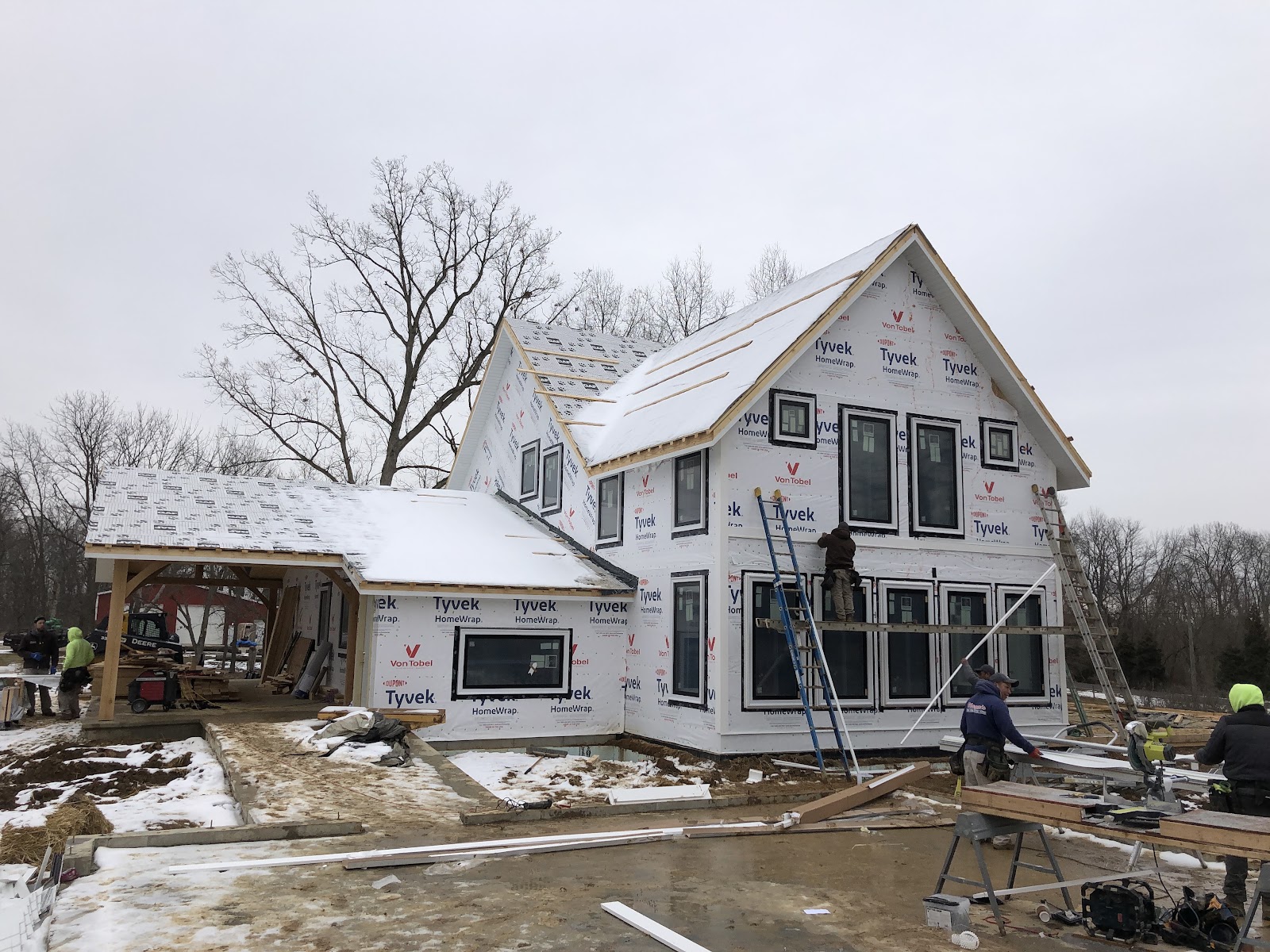




Planning a home remodel can become overwhelming very fast. From deciding what trades to hire and trying to figure out how to keep the whole project from spiraling into delays and mismatched work, there are a lot of moving parts.
Rather than juggling each of these separate tasks on your own, you can bring in one professional who manages the entire job from planning through final walkthrough. Here's what working with a general contractor looks like in practice, and why it makes such a difference for homeowners taking on a remodel.
What is a general contractor?
A general contractor is a professional who oversees and manages a construction or remodeling project from start to finish. When you hire a general contractor, you're bringing on an expert who takes responsibility for the entire project, not just one piece of it.
Full-service contractors typically bring their own crews or long-standing relationships with subcontractors they trust. These established partnerships mean your general contractor has already vetted the electricians, plumbers, and carpenters who'll be working on your home. They know these professionals' work quality and reliability because they've collaborated on dozens of past projects together.
General Contractor vs. Subcontractor
While they are often confused for one another, a general contractor and a subcontractor perform different work. A general contractor manages the entire project, while a subcontractor is brought in to handle one specific trade or task. In most cases, a general contractor hires and coordinates the subcontractors a project needs. If your project is small or highly specific, you may only need a subcontractor that you can hire on your own. But for anything larger, a general contractor is what keeps the whole job on track.
General Contractor vs. Construction Manager
General contractors and construction managers can look similar on the surface, but they vary when it comes to scope. Construction managers typically focus on big-picture items, such as planning, coordination, and budget oversight. General contractors handle a broader scope, from acquiring materials and permits to managing every subcontractor on site. Occasionally, a general contractor will even bring on a construction manager to oversee the day-to-day work of a larger remodel or build.
What does a general contractor actually do?
A general contractor does much more than simply show up on the job site. They help plan, coordinate, and manage the many moving parts of a construction or renovation project, keeping the work on track from start to finish.
Planning & Project Management
Your general contractor starts by understanding your goals for the project, and then builds a comprehensive plan designed to get the work done to your satisfaction in the most cost-effective way. That plan includes a full timeline and the correct order for every trade involved, so everyone shows up exactly when they're supposed to. In a kitchen remodel, for example, they'll make sure the countertop installer doesn't arrive before the cabinets are in place.
Hiring & Managing Subcontractors
Again, subcontractors are tradesmen who are skilled in specific projects or areas. For example, you may need an electrical subcontractor if you plan on updating your light fixtures in your bathroom renovations.
With larger projects like home additions or kitchen remodelling, it’s likely you’ll need a variety of skilled professionals. A general contractor will take on the work of hiring these individuals and bringing them in when necessary.
Communication with the Homeowner
Your general contractor serves as the single or primary point of contact throughout the entire project. Instead of having to communicate and coordinate with multiple subcontractors, you only need to reach out to one person who will have all the information you need. They will provide regular updates on progress, scheduling, and any issues that may arise.
Managing Permitting & Compliance
One of the most valuable—and least visible—parts of a general contractor's job is how they manage building permits and code compliance on your behalf. They pull all necessary building permits, make sure the work meets local building codes, and coordinate the required inspections. On a second-story addition, for example, your general contractor navigates the permitting process, arranges structural inspections, and makes sure everything is properly documented for your home's records and future resale value.
Ordering Materials
A general contractor is in charge of ordering and procuring any and all materials for your project. Oftentimes, they have established relationships with suppliers that can help them get exactly what they need quickly. They coordinate when each material is brought onsite so that everything remains in order rather than piling up on site before anyone's ready for them.
Quality Control
Your general contractor is responsible for making sure everything meets professional standards, catching and addressing issues before they turn into bigger problems. They inspect the work at every stage of the project to confirm it holds up to the expected level of quality—acting as your advocate for solid workmanship throughout.
Problem Solving & Flexibility
Construction rarely goes exactly according to plan. A good general contractor anticipates potential issues and handles the surprises that inevitably come up, whether that's discovering asbestos insulation during a wall demolition or working around a delayed material shipment. Because they oversee every aspect of the project, they also have the flexibility to adjust timelines, resources, or plans on the fly when changes are needed.
What are the benefits of working with a general contractor for home remodel projects?
Hiring a general contractor changes the entire experience of a remodel, not just who's swinging the hammer. When one person is accountable for the whole project, the day-to-day burden of managing a renovation shifts off your shoulders and onto theirs.
Single Point of Contact
That starts with communication. Instead of fielding calls from an electrician, a plumber, and a framing crew separately, you have one person to call with questions or changes—and one person who can answer them, because they're tracking every moving part.
Efficiency & Better Accountability
When trades work independently, one crew often ends up waiting on another, or accidentally undoing another's work. A general contractor keeps everyone moving in the right order, which keeps the project on schedule and keeps accountability clear. If something goes wrong, there's no ambiguity about who's responsible for fixing it.
Financial & Legal Protection
A quality general contractor should be bonded and insured, giving homeowners an added layer of financial and legal security throughout the project. Bonding provides the homeowners with protection if the contractor fails to meet certain contractual obligations, while insurance helps protect against covered accidents, property damage, or other unexpected issues. Before hiring a contractor, ask about their bonding and insurance coverage and make sure it’s current.
Built-In Network
Full-service contractors often bring their own network of trusted subcontractors and suppliers, which often means better pricing and material access than a homeowner could arrange independently. Coordinating that network under one roof also removes a layer of markup that tends to creep in when several independent contractors are all pricing on their own. Combined with tighter scheduling, that usually means the project costs less and finishes faster than a patchwork approach would.
Flexibility & Customizability
A general contractor also gives your remodel more room to flex. If demolition uncovers an unexpected issue, or your priorities shift partway through, a general contractor can adjust the plan without forcing you to renegotiate with several separate parties.
Cost & Time Savings
Hiring one contractor to handle multiple projects may seem like the more expensive option, but it can actually help you save money. When you work with several contractors, you may end up paying for overlapping costs, coordination, and additional time spent managing separate estimates and schedules. A full-service contractor can streamline the entire process.
You’ll save time, too. With one contractor overseeing the project, different phases of the work can be scheduled more efficiently, reducing the gaps and delays that can happen when you're waiting for one company to finish before the next can begin.
Consistency & Quality Control
When one contractor handles multiple aspects of your project, you can expect a consistent level of quality throughout the entire job. You don't have to worry about one contractor delivering exceptional work while another falls short of your expectations.
A full-service contractor understands how each part of the project fits together, helping ensure that everything—from the finishes and materials to the final details—works together seamlessly. The result is a more cohesive, polished space that feels complete rather than pieced together.
Reduced Stress Now & Later
One of the biggest benefits of finding a contractor you trust you trust is knowing who to call the next time you need work done. Once you've established a relationship with a reliable team, you don't have to start from scratch every time a new project comes up.
You already know how they work, what level of quality to expect, and that they'll communicate with you throughout the process. That familiarity eliminates much of the uncertainty that comes with hiring someone new.
A home remodel involves a lot of moving parts, and a general contractor's job is to make sure none of them fall through the cracks. From the first planning conversation to the final walkthrough, they're the one keeping your project organized, on budget, and moving forward, so you can focus on the outcome instead of the logistics.